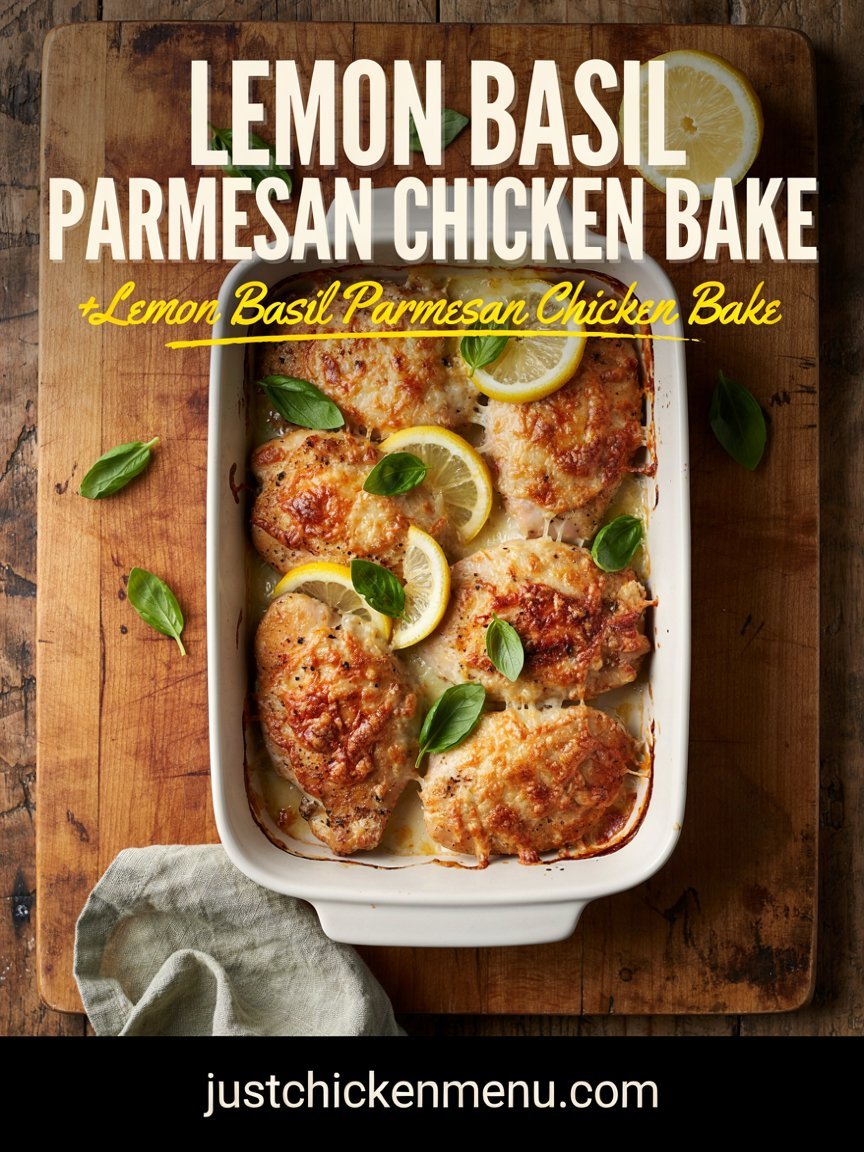
Lemon Basil Parmesan Chicken Bake
Tender chicken breasts baked in a creamy, savory sauce with fresh basil, Parmesan, garlic, and bright lemon make this an easy dinner that feels far more special than the effort required. The chicken stays juicy while the Parmesan develops a lightly golden, flavorful finish in the oven.
The combination of lemon and basil keeps the rich sauce from feeling heavy, while garlic and Parmesan add plenty of savory depth. It is the kind of comforting meal that works beautifully for a relaxed weeknight dinner but is also polished enough for Sunday supper or casual entertaining.
Recipe Information
| Recipe Information | Details |
|---|---|
| Prep Time | 15 minutes |
| Cook Time | 30 minutes |
| Marinating Time | N/A |
| Total Time | 45 minutes |
| Servings | 4 servings |
| Calories | 475 kcal per serving |
| Difficulty | Easy |
| Cuisine | American-Italian |
| Course | Dinner / Main Course |
| Diet | High Protein |
Introduction
There is something wonderfully satisfying about a chicken dinner that comes together in one baking dish. This version pairs lightly seasoned chicken with a silky lemon-garlic cream sauce, plenty of Parmesan cheese, and fragrant fresh basil. As everything bakes, the sauce thickens around the chicken and the cheese melts into a golden, savory topping.
The flavor is bright, creamy, garlicky, and just a little tangy from fresh lemon juice. Each bite gives you juicy chicken, nutty Parmesan, and tender basil, with enough sauce to spoon over rice, pasta, or vegetables. It is an especially good choice when you want a comforting meal without spending your entire evening at the stove.
Why You’ll Love This Recipe
- Easy one-dish preparation: Most of the cooking happens in the oven.
- Tender, juicy chicken: A flavorful sauce helps keep the chicken moist as it bakes.
- Bright and creamy flavor: Lemon cuts through the richness of the Parmesan sauce.
- Weeknight friendly: You can have dinner ready in about 45 minutes.
- Family approved: The mild garlic, cheese, and herb flavors are approachable and comforting.
- High in protein: Chicken and Parmesan provide a substantial protein boost.
- Flexible serving options: Pair it with pasta, rice, potatoes, or vegetables.
- Great for entertaining: The finished dish looks inviting straight from the baking dish.
Ingredients
Chicken
- 4 boneless, skinless chicken breasts, about 6 ounces (170 g) each
- 1 tablespoon olive oil
- 1 teaspoon kosher salt
- 1/2 teaspoon freshly ground black pepper
- 1 teaspoon Italian seasoning
- 1/2 teaspoon garlic powder
- 1/2 teaspoon paprika
Lemon Basil Parmesan Sauce
- 1 tablespoon unsalted butter
- 4 garlic cloves, finely minced
- 1 cup heavy cream
- 1/2 cup low-sodium chicken broth
- 3/4 cup freshly grated Parmesan cheese
- 1 tablespoon fresh lemon juice
- 1 teaspoon finely grated lemon zest
- 1/4 teaspoon kosher salt
- 1/4 teaspoon black pepper
- 1/4 teaspoon red pepper flakes, optional
- 1/3 cup fresh basil leaves, finely chopped
Garnish
- 2 tablespoons freshly grated Parmesan cheese
- 2 tablespoons fresh basil leaves, thinly sliced
- Lemon wedges, for serving
Ingredient Notes
Chicken breasts: Choose pieces that are similar in size so they cook evenly. If your breasts are especially thick, gently pound them to an even thickness.
Parmesan: Freshly grated Parmesan melts more smoothly and gives the sauce better flavor than pre-shredded cheese.
Heavy cream: It creates a rich, stable sauce. For a lighter option, use half-and-half, although the sauce will be slightly thinner.
Fresh basil: Fresh basil provides a much brighter flavor than dried basil. Add most of it toward the end of cooking to preserve its fresh aroma.
Lemon: Fresh lemon juice and zest make a noticeable difference. Bottled lemon juice can work in a pinch, but fresh is preferable.
Chicken broth: Low-sodium broth gives you more control over the final saltiness. Vegetable broth can also be substituted.
Red pepper flakes: These are optional but add a gentle warmth that complements the lemon and Parmesan.
Kitchen Equipment
- 9 x 13-inch baking dish
- Large skillet
- Small mixing bowl
- Measuring spoons and cups
- Chef’s knife
- Cutting board
- Microplane or fine grater
- Tongs or kitchen spatula
- Instant-read meat thermometer
Instructions
- Preheat the oven. Heat your oven to 400°F (200°C). Lightly grease a 9 x 13-inch baking dish and set it aside while you prepare the chicken and sauce.
- Prepare the chicken. Pat the chicken breasts dry with paper towels, then brush them with olive oil. Season both sides evenly with salt, black pepper, Italian seasoning, garlic powder, and paprika, pressing the seasonings gently into the meat.
- Sear the chicken. Heat a large skillet over medium-high heat. Add the seasoned chicken and sear for about 2 minutes per side, just until lightly golden; it does not need to be cooked through at this stage. Avoid crowding the pan, since excess moisture can prevent good browning.
- Build the sauce. Reduce the skillet heat to medium and add the butter. Once melted, add the minced garlic and cook for about 30 seconds, stirring constantly so it becomes fragrant without browning.
- Add the creamy ingredients. Pour in the heavy cream and chicken broth, stirring to loosen any flavorful browned bits from the bottom of the skillet. Simmer gently for 2–3 minutes, then remove the skillet from the heat.
- Finish the lemon-Parmesan mixture. Stir in 3/4 cup Parmesan, lemon juice, lemon zest, salt, black pepper, and red pepper flakes if using. Stir until the cheese is incorporated and the sauce looks smooth. Let it cool for about 1 minute before stirring in the chopped basil.
- Arrange everything for baking. Place the seared chicken breasts in the prepared baking dish and pour the sauce evenly over and around them. Sprinkle the remaining 2 tablespoons of Parmesan over the chicken for a lightly golden finish.
- Bake until cooked through. Transfer the dish to the oven and bake for about 20–25 minutes, depending on the thickness of the chicken. The thickest part should reach 165°F (74°C) on an instant-read thermometer.
- Rest and garnish. Remove the baking dish from the oven and let the chicken rest for 5 minutes. Scatter the remaining fresh basil over the top and serve with lemon wedges. Spoon plenty of the warm Parmesan sauce over each portion.
Chef Tips
- Pound thick chicken breasts to an even thickness for more consistent cooking.
- Always pat chicken dry before seasoning and searing.
- Do not fully cook the chicken during the initial sear; it will finish in the oven.
- Use freshly grated Parmesan for the smoothest sauce.
- Keep the cream at a gentle simmer rather than a vigorous boil.
- Add fresh basil near the end so its flavor remains fresh and aromatic.
- Taste the sauce before adding extra salt because Parmesan is naturally salty.
- Use an instant-read thermometer rather than relying only on cooking time.
- Let the chicken rest for several minutes before slicing.
- Serve immediately while the sauce is warm and silky.
Variations
Spicy Lemon Basil Chicken
Increase the red pepper flakes to 1/2 teaspoon, or add a pinch of cayenne for more noticeable heat.
Mushroom Version
Sauté 8 ounces of sliced mushrooms after searing the chicken, then incorporate them into the sauce before baking.
Low-Carb Version
Serve the chicken with roasted broccoli, cauliflower rice, zucchini noodles, or a simple green salad.
Vegetable-Loaded Version
Add sliced zucchini, cherry tomatoes, spinach, or asparagus around the chicken before baking.
Extra-Cheesy Version
Add 1/4 cup shredded mozzarella over the Parmesan before placing the dish in the oven.
Dairy-Free Version
Use a plant-based cooking cream and dairy-free Parmesan-style cheese. Check the labels to ensure the products suit your dietary needs.
Gluten-Free Version
The recipe is naturally gluten-free when all packaged ingredients, especially the chicken broth and seasonings, are certified gluten-free if necessary for your needs.
Fresh Herb Version
Replace some of the basil with chopped parsley or add a small amount of fresh thyme for another layer of herbal flavor.
What to Serve With It
- Garlic mashed potatoes: Perfect for soaking up the creamy lemon-Parmesan sauce.
- Steamed broccoli: Its mild flavor balances the richness of the chicken.
- Roasted asparagus: A simple roasted vegetable adds freshness and a pleasant crisp-tender texture.
- Buttered rice: An easy base that lets the sauce take center stage.
- Angel hair pasta: Toss the pasta with some of the sauce for an especially comforting meal.
- Roasted baby potatoes: Their crisp edges and fluffy centers pair beautifully with creamy sauce.
- Green salad: Lettuce, cucumber, and a light vinaigrette add a refreshing contrast.
- Sautéed spinach: Quick-cooked greens make the plate more colorful and nutritious.
- Crusty French bread: Excellent for scooping up every last bit of sauce.
- Roasted cauliflower: A hearty low-carb side that works particularly well with the creamy sauce.
Storage
Refrigerator
Allow leftovers to cool slightly, then transfer the chicken and sauce to an airtight container. Refrigerate within 2 hours of cooking and use within 3–4 days.
Freezer
For best texture, freeze the cooked chicken separately from the sauce if possible. Place cooled portions in freezer-safe containers and freeze for up to 2 months. Thaw overnight in the refrigerator before reheating.
Reheating
Reheat gently in a covered skillet over low to medium-low heat, adding a splash of chicken broth or cream if the sauce has thickened. You can also microwave individual portions in short intervals, stirring the sauce between intervals. Heat until the chicken reaches 165°F (74°C).
Common Mistakes to Avoid
- Using uneven chicken breasts: Different thicknesses can cause some pieces to overcook before others are done.
- Skipping the sear: Browning adds valuable flavor and gives the chicken a more appealing finish.
- Overcooking the chicken: Use a thermometer and remove it from the oven once it reaches 165°F (74°C).
- Boiling the cream aggressively: High heat can make the sauce separate or become grainy.
- Adding Parmesan over very high heat: Excessive heat can cause cheese to clump instead of melting smoothly.
- Using too much lemon juice: Start with the stated amount so the sauce stays balanced rather than overly acidic.
- Adding basil too early: Long cooking can dull its fresh flavor.
- Forgetting to taste the sauce: Parmesan and chicken broth can vary considerably in saltiness.
- Slicing immediately: Resting the chicken helps retain its juices.
- Overcrowding the skillet: Give each chicken breast enough room to brown properly.
Frequently Asked Questions
Can I use chicken thighs instead of chicken breasts?
Yes. Boneless, skinless chicken thighs are an excellent substitute and tend to remain especially juicy. Because they vary in size, check their internal temperature rather than relying strictly on the listed baking time.
Can I make this recipe with thin chicken cutlets?
Absolutely. Thin cutlets will cook much faster, so reduce the baking time and begin checking their temperature after about 12–15 minutes. They are done when the thickest part reaches 165°F (74°C).
Can I prepare the sauce ahead of time?
Yes. You can prepare the sauce several hours ahead and refrigerate it in a covered container. Warm it gently before combining it with the chicken, adding a small splash of broth if it has become too thick.
Why did my Parmesan sauce become grainy?
The most common causes are excessive heat or adding Parmesan to a sauce that is boiling vigorously. Remove the sauce from direct heat before stirring in the cheese and use freshly grated Parmesan.
Can I use bottled lemon juice?
You can, although fresh lemon juice provides a cleaner, brighter flavor. Fresh zest is particularly valuable because it contributes concentrated citrus aroma without adding extra acidity.
Can I make this without heavy cream?
Yes. Half-and-half can be used for a lighter sauce. Keep the heat gentle because lower-fat dairy is more likely to separate when boiled.
How do I know when the chicken is done?
The safest method is to insert an instant-read thermometer into the thickest portion of the chicken. It should register 165°F (74°C).
Can I add vegetables directly to the baking dish?
Yes. Broccoli florets, asparagus, zucchini, spinach, or halved cherry tomatoes can work well. Keep the vegetables in reasonably sized pieces so they cook at approximately the same rate as the chicken.
Can I make this recipe gluten-free?
Yes. The basic ingredients do not require wheat flour, making the dish naturally gluten-free. If you need strict gluten-free preparation, verify that your broth, seasonings, and other packaged ingredients are certified gluten-free.
What is the best way to prevent leftovers from drying out?
Store the chicken with plenty of sauce and reheat it gently rather than at high heat. Adding a tablespoon or two of chicken broth or cream during reheating can help restore the sauce’s consistency.
Nutrition Information
| Nutrient | Per Serving |
|---|---|
| Calories | 475 kcal |
| Protein | 45 g |
| Carbohydrates | 7 g |
| Fat | 29 g |
| Saturated Fat | 15 g |
| Cholesterol | 154 mg |
| Sodium | 690 mg |
| Potassium | 650 mg |
| Fiber | 1 g |
| Sugar | 2 g |
| Vitamin A | 18% DV |
| Vitamin C | 8% DV |
| Calcium | 22% DV |
| Iron | 8% DV |
Nutrition values are approximate and may vary depending on the ingredients used.
Recipe Tips for Success
- Choose similarly sized chicken breasts so they finish cooking at roughly the same time.
- Dry the chicken thoroughly before seasoning to encourage better browning.
- Do not rush the sauce: gentle heat keeps the cream and Parmesan smooth.
- Grate Parmesan fresh whenever possible for superior melting and flavor.
- Use fresh basil at the end for the brightest herbal character.
- Check the temperature early if your chicken breasts are smaller than the recipe calls for.
- Let the chicken rest for 5 minutes before serving to help retain its juices.
- Serve with a starch or vegetable that can catch the sauce, because the creamy lemon-Parmesan mixture is one of the best parts of the meal.
Final Thoughts
A great chicken dinner does not need a complicated ingredient list or hours of preparation. This recipe brings together familiar ingredients—garlic, Parmesan, lemon, basil, and cream—in a way that creates a rich but balanced sauce around tender baked chicken.
Make it your own by adding vegetables, turning up the heat with red pepper flakes, or serving it over your favorite pasta or rice. Whether it lands on your weeknight rotation or becomes a meal you save for guests, it is the kind of comforting dinner that invites everyone back to the table.
Leave a Reply