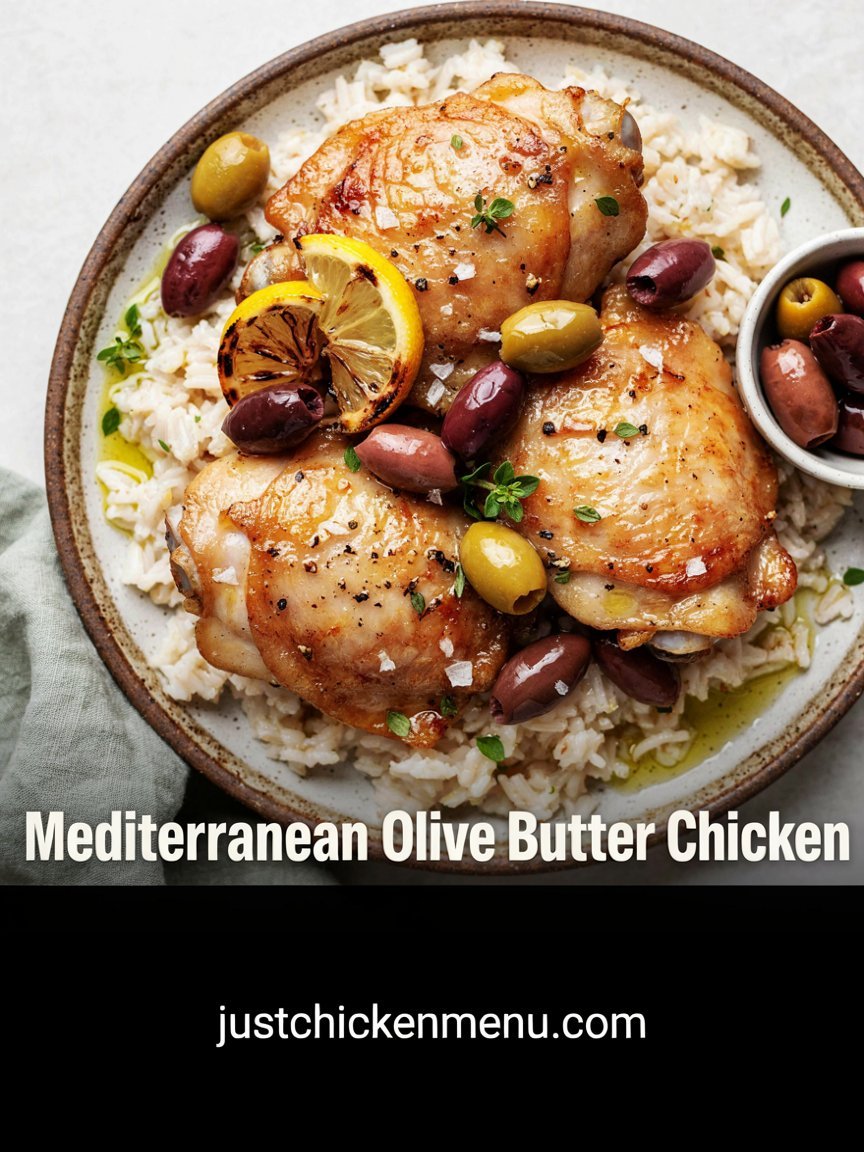
Mediterranean Olive Butter Chicken
There’s something wonderfully comforting about a skillet of golden chicken simmered in a rich, savory sauce—and this version gets its character from briny olives, creamy butter, garlic, lemon, and fragrant Mediterranean herbs. The result is a chicken dinner that feels special enough for company but is simple enough to make on a busy weeknight.
The chicken stays juicy and tender while the sauce becomes silky, buttery, tangy, and deeply savory. Fresh parsley and lemon brighten every bite, while the olives add little bursts of salty richness. Serve it with warm crusty bread, rice, couscous, or roasted vegetables for an easy dinner everyone will want seconds of.
Recipe Information
| Recipe Information | Details |
|---|---|
| Prep Time | 15 minutes |
| Cook Time | 25 minutes |
| Marinating Time | N/A |
| Total Time | 40 minutes |
| Servings | 4 servings |
| Calories | 510 kcal per serving |
| Difficulty | Easy |
| Cuisine | Mediterranean-Inspired |
| Course | Dinner / Main Course |
| Diet | High Protein |
Introduction
This skillet chicken is built around a simple idea: take everyday chicken breasts and give them plenty of Mediterranean personality. A quick sear creates a beautiful golden crust, then the chicken finishes cooking in a buttery pan sauce infused with garlic, lemon, oregano, and green olives.
What makes this dish especially appealing is the balance of flavors. The butter provides richness, lemon adds brightness, olives bring a pleasantly salty bite, and herbs keep the sauce fresh rather than heavy. It is a cozy meal for a family dinner, an easy date-night entrée, or a relaxed weekend gathering with friends.
Why You’ll Love This Recipe
- One-skillet convenience: Everything comes together in one pan for easier cooking and cleanup.
- Big flavor from simple ingredients: Garlic, lemon, olives, butter, and herbs do most of the work.
- Tender chicken: A quick sear followed by gentle simmering helps keep the chicken juicy.
- Rich but balanced sauce: Butter adds silkiness while lemon and olives cut through the richness.
- Weeknight friendly: You can have dinner on the table in about 40 minutes.
- Easy to customize: Add vegetables, spice, feta, or extra herbs to make it your own.
- Perfect for serving guests: The golden chicken and glossy sauce look beautiful straight from the skillet.
- Pairs with almost anything: Rice, couscous, potatoes, pasta, and vegetables all work beautifully.
Ingredients
Chicken
- 4 boneless, skinless chicken breasts, about 6 ounces (170 g) each
- 1 teaspoon kosher salt
- ½ teaspoon freshly ground black pepper
- 1 teaspoon dried oregano
- ½ teaspoon smoked paprika
- 2 tablespoons all-purpose flour
- 2 tablespoons extra-virgin olive oil
Olive Butter Sauce
- 3 tablespoons unsalted butter, divided
- 5 cloves garlic, finely minced
- 1 small shallot, finely diced
- 1 cup low-sodium chicken broth
- ¾ cup pitted green olives, halved
- 1 teaspoon dried oregano
- ½ teaspoon dried thyme
- 1 teaspoon finely grated lemon zest
- 2 tablespoons fresh lemon juice
- ¼ teaspoon crushed red pepper flakes, optional
- 2 tablespoons chopped fresh parsley
Garnish
- 1 tablespoon chopped fresh parsley
- 1 tablespoon finely sliced green olives
- Lemon wedges, for serving
- Freshly cracked black pepper
Ingredient Notes
Chicken breasts: Boneless, skinless breasts work well here, but boneless chicken thighs are an excellent substitute. Thighs will be richer and more forgiving if slightly overcooked.
Green olives: Castelvetrano olives are especially good because they are buttery and mild. Kalamata olives can also be used for a deeper, fruitier flavor.
Butter: Unsalted butter gives you better control over the saltiness because olives and chicken broth already contain sodium.
Lemon: Fresh lemon juice makes a noticeable difference. Bottled lemon juice can work in a pinch, but fresh lemon provides a brighter flavor.
Flour: A light coating helps the chicken brown beautifully and gives the sauce a little extra body. For a gluten-free version, use a certified gluten-free all-purpose flour or cornstarch.
Chicken broth: Use low-sodium broth whenever possible so the olives don’t make the finished sauce overly salty.
Kitchen Equipment
- Large heavy-bottomed skillet
- Cutting board
- Chef’s knife
- Meat mallet or rolling pin
- Measuring spoons and cups
- Tongs
- Wooden spoon or silicone spatula
- Instant-read thermometer
- Fine grater or microplane
Instructions
- Prepare the chicken. Place each chicken breast between two sheets of plastic wrap or parchment and gently pound the thickest portion until the pieces are fairly even in thickness, about ½ to ¾ inch. Season both sides with kosher salt, black pepper, oregano, and smoked paprika.
- Lightly coat the chicken. Sprinkle the flour over the chicken and turn the pieces to coat lightly on both sides. Shake off any excess flour so you get a delicate crust rather than a thick coating.
- Sear the chicken. Heat the olive oil in a large skillet over medium-high heat. Once the oil is shimmering, add the chicken and cook for about 3–4 minutes per side, until deeply golden; the chicken does not need to be fully cooked yet.
- Set the chicken aside. Transfer the browned chicken to a clean plate and loosely cover it with foil. Keeping it nearby allows the juices to settle while you build the sauce without letting the chicken continue cooking too aggressively.
- Build the aromatic base. Reduce the heat to medium and add 1 tablespoon of butter to the same skillet. Add the shallot and cook for about 2 minutes, stirring frequently, then add the garlic and cook for another 30–45 seconds until fragrant.
- Deglaze the skillet. Pour in the chicken broth and scrape the browned bits from the bottom of the pan with a wooden spoon. Those caramelized bits are packed with flavor and will become part of the finished sauce.
- Add the Mediterranean flavors. Stir in the olives, oregano, thyme, lemon zest, lemon juice, and red pepper flakes if using. Let the mixture simmer gently for 3–4 minutes so the broth reduces slightly and the olives flavor the sauce.
- Finish with butter. Reduce the heat to low and whisk in the remaining 2 tablespoons of butter until melted and the sauce looks glossy. Keeping the heat low helps the butter emulsify into the broth rather than separating.
- Return the chicken to the skillet. Nestle the chicken into the sauce along with any juices that collected on the plate. Simmer gently for 4–6 minutes, turning the chicken once, until the thickest part reaches 165°F (74°C).
- Finish and serve. Remove the skillet from the heat and stir in the fresh parsley. Taste the sauce and adjust with a little more lemon juice or black pepper if needed, then garnish with additional parsley, sliced olives, and lemon wedges.
Chef Tips
- Pound chicken breasts to an even thickness so they cook at the same rate.
- Don’t overcrowd the skillet during searing; cook in batches if necessary.
- Wait until the oil is hot before adding the chicken to encourage browning.
- Avoid adding too much flour because a heavy coating can make the sauce pasty.
- Scrape the browned bits from the pan when adding broth for maximum flavor.
- Use low-sodium broth because olives naturally contribute plenty of salt.
- Add the butter over low heat for a smooth, glossy sauce.
- Don’t boil the sauce aggressively after adding butter.
- Use an instant-read thermometer and remove the chicken once it reaches 165°F (74°C).
- Taste before adding additional salt because the olives and broth may already provide enough.
Variations
Spicy Version
Increase the crushed red pepper flakes and add a pinch of cayenne for extra heat.
Air Fryer Version
Season and lightly flour the chicken, then air fry at 375°F (190°C) until the chicken reaches 165°F (74°C). Prepare the olive butter sauce separately on the stovetop and spoon it over the cooked chicken.
Oven-Baked Version
Sear the chicken in an oven-safe skillet, prepare the sauce, then transfer the skillet to a 375°F (190°C) oven until the chicken reaches 165°F (74°C).
Grilled Version
Season the chicken with oregano, paprika, salt, and pepper, then grill until cooked through. Make the olive butter sauce separately and spoon it over the grilled chicken before serving.
Low-Carb Version
Skip the flour coating and serve the finished chicken with cauliflower rice, sautéed spinach, or roasted zucchini.
Dairy-Free Version
Replace the butter with additional extra-virgin olive oil or a good-quality dairy-free butter alternative.
Gluten-Free Version
Replace the all-purpose flour with a gluten-free flour blend or use a small amount of cornstarch for coating.
Feta & Herb Version
Crumble feta over the finished chicken and add fresh dill or mint along with the parsley.
What to Serve With It
- Lemon couscous: Its light, fluffy texture soaks up the buttery olive sauce beautifully.
- Herbed rice: Simple rice provides a neutral base for the flavorful sauce.
- Warm pita bread: Perfect for scooping up every last drop of sauce.
- Roasted potatoes: Crisp edges and creamy centers make a hearty pairing.
- Greek-style salad: Tomatoes, cucumber, herbs, and a bright dressing provide refreshing contrast.
- Roasted zucchini: Mild zucchini works particularly well with the lemony sauce.
- Sautéed spinach: A quick green vegetable keeps the meal balanced without competing with the chicken.
- Quinoa: Nutty quinoa adds extra texture and makes the meal especially satisfying.
- Roasted asparagus: Its slightly crisp texture pairs nicely with tender chicken.
- Steamed green beans: A simple vegetable side lets the main dish remain the star.
Storage
Refrigerator
Allow leftovers to cool before transferring them to an airtight container. Refrigerate for up to 3–4 days.
Freezer
For best texture, freeze the cooked chicken and sauce in an airtight freezer-safe container for up to 2 months. Thaw overnight in the refrigerator before reheating.
Reheating
Reheat gently in a covered skillet over low to medium-low heat with a splash of chicken broth. Stir the sauce occasionally and heat until the chicken reaches 165°F (74°C), taking care not to overcook it.
Common Mistakes to Avoid
- Using uneven chicken breasts: Thick portions may stay undercooked while thinner areas dry out.
- Skipping the sear: Browning creates a deeper savory flavor and better texture.
- Overcrowding the pan: Too much chicken at once can cause steaming instead of browning.
- Using high heat after adding butter: Excessive heat can cause the sauce to separate.
- Over-salting the dish: Olives can be quite salty, so taste before adding extra salt.
- Using too much flour: A heavy coating can make the sauce unnecessarily thick.
- Boiling the chicken aggressively: Gentle simmering helps preserve tenderness.
- Overcooking the chicken: Use a thermometer instead of relying only on cooking time.
- Skipping the lemon: The acidity helps balance the richness of the butter.
- Adding parsley too early: Fresh herbs are best added near the end so their flavor stays bright.
Frequently Asked Questions
Can I use chicken thighs instead of chicken breasts?
Absolutely. Boneless, skinless chicken thighs are excellent in this recipe and tend to stay especially juicy. Cook them until the thickest portion reaches 165°F (74°C).
What type of olives work best?
Green olives are ideal for the buttery Mediterranean character of the sauce. Castelvetrano olives are mild and creamy, while Kalamata olives provide a stronger, fruitier flavor.
Can I make this recipe without flour?
Yes. Simply omit the flour if you prefer. The chicken will still brown nicely, although the sauce may have slightly less body.
Can I prepare the chicken ahead of time?
You can season and lightly flour the chicken several hours ahead and keep it covered in the refrigerator. Bring it out while you prepare the skillet so it isn’t extremely cold when it hits the pan.
Why is my sauce too salty?
The most common culprit is the combination of olives and regular-sodium broth. Use low-sodium broth and taste the sauce before adding additional salt.
Can I add vegetables to the skillet?
Definitely. Spinach, cherry tomatoes, zucchini, mushrooms, or roasted red peppers can all work well. Add vegetables according to their cooking time so they don’t become overly soft.
Can I use salted butter?
Yes, but reduce or eliminate additional salt until you’ve tasted the finished sauce. Olives already contribute substantial saltiness.
How do I know when the chicken is done?
The safest method is an instant-read thermometer inserted into the thickest part of the chicken. It should register 165°F (74°C).
Can I make this recipe dairy-free?
Yes. Substitute the butter with a dairy-free butter alternative or use extra-virgin olive oil. The sauce will be slightly different but still delicious.
What can I do with leftover sauce?
Don’t throw it away. Spoon it over rice, roasted vegetables, potatoes, couscous, or warm bread—the sauce is one of the best parts of the dish.
Nutrition Information
| Nutrient | Per Serving |
|---|---|
| Calories | 510 kcal |
| Protein | 48 g |
| Carbohydrates | 12 g |
| Fat | 30 g |
| Saturated Fat | 10 g |
| Cholesterol | 150 mg |
| Sodium | 890 mg |
| Potassium | 720 mg |
| Fiber | 2 g |
| Sugar | 2 g |
| Vitamin A | 12% DV |
| Vitamin C | 10% DV |
| Calcium | 5% DV |
| Iron | 12% DV |
Nutrition values are approximate and may vary depending on the ingredients used.
Recipe Tips for Success
- Choose evenly sized chicken breasts so every piece finishes cooking at roughly the same time.
- Don’t rush the sear. Give the chicken enough time to develop a deep golden crust before flipping.
- Use fresh garlic and lemon whenever possible for the brightest flavor.
- Taste the olives first if possible; some varieties are considerably saltier than others.
- Keep the sauce at a gentle simmer once the chicken goes back into the skillet.
- Finish with fresh herbs right before serving to add freshness and color.
- Balance the sauce at the end with lemon juice if it tastes too rich.
- Serve immediately while the sauce is warm, silky, and glossy.
Final Thoughts
This is the kind of chicken dinner that proves you don’t need a long ingredient list or complicated technique to create something memorable. The combination of golden chicken, buttery sauce, briny olives, garlic, herbs, and fresh lemon gives every bite plenty of character while keeping the cooking process wonderfully approachable.
Serve it family-style with your favorite sides, or turn it into a relaxed Mediterranean-inspired dinner with warm bread and a crisp salad. And once you’ve made it once, don’t be afraid to adjust the herbs, olives, or spice level to suit your table—those little personal touches are what make a great homemade recipe your own.
Leave a Reply